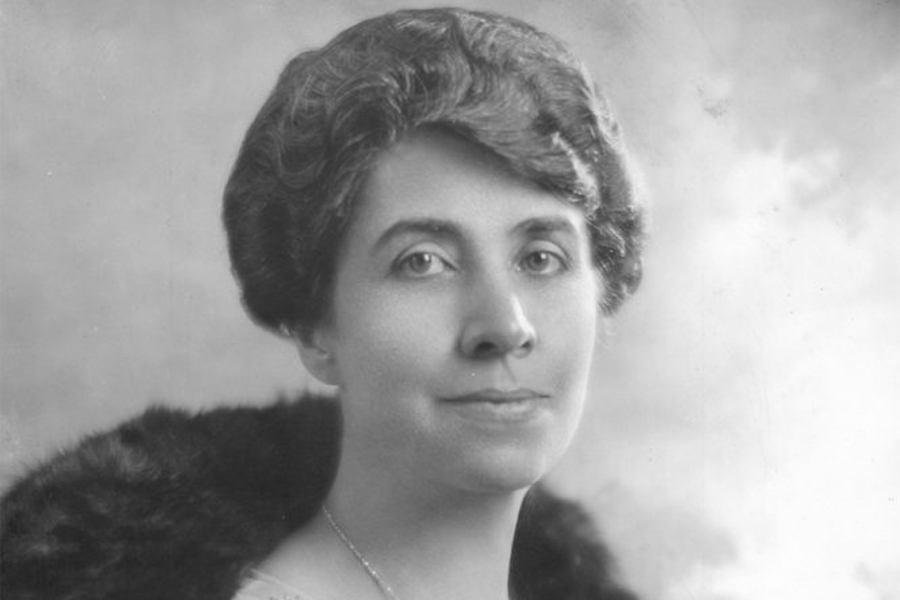
Basic Information
| Field | Detail |
|---|---|
| Full name | Victoria Josephine Moor |
| Born | March 14, 1846 |
| Birthplace | Plymouth, Windsor County, Vermont |
| Died | March 14, 1885 (age 39) |
| Parents | Hiram Dunlap Moor (1812-1888), Abigail Franklin Moor (1811-1892) |
| Spouse | John Calvin Coolidge Sr. (married May 6, 1868) |
| Children | John Calvin Coolidge Jr. (July 4, 1872), Abigail Grace Coolidge (April 15, 1875 – March 6, 1890) |
| Occupation | Homemaker, domestic duties on a small farm |
| Burial | Plymouth Notch Cemetery, Plymouth, Vermont |
| Notable connection | Mother of Calvin Coolidge, 30th U.S. President |
Life in Dates and Details
Victoria Josephine Moor belongs to a class of nineteenth century women whose names survive mainly because of the fame that later touched a son. Her life reads like a rural hymn: concise, repeated lines of daily work, family devotion, and seasons measured by planting and harvest. Born into a farming household on March 14, 1846, she grew up in Plymouth, Vermont, where the weather and the land kept their own calendar and the house on the hill held the rhythms of ordinary life.
Education for girls of her station was practical and brief. Victoria attended Black River Academy in Ludlow for one year around 1860. That single year of formal schooling is a small bright point in a life otherwise organized around home and family. At age 22 she married John Calvin Coolidge Sr. on May 6, 1868, joining two neighboring families and setting up a household that would produce both joy and sorrow.
Household tasks and quiet cultivation were Victoria’s work. Her life had no public career or listed profession. Instead, she managed the domestic sphere in a modest farm setting, overseeing child care and the daily economy of a family that combined subsistence with small-scale commerce, since her husband later served as a storekeeper and a local official in addition to farming.
Motherhood and Family Ties
Motherhood arrived with two children who would shape the family’s legacy. John Calvin Coolidge Jr., born July 4, 1872, would become the 30th President of the United States and would frequently evoke his mother in later life as a formative influence. Abigail Grace Coolidge, born April 15, 1875, shared her mother’s love of reading but died young on March 6, 1890, creating a second wound in the family story.
Victoria’s relationship with her husband John was typical of rural New England marriages in that era: a partnership centered on keeping land and household solvent, punctuated by local civic responsibilities and social routines. After Victoria’s death, John remarried, a common practical step in a farming family where household labor needed continuity.
Illness and Early Death
The most defining domestic turn in Victoria’s life was illness. By the late 1870s or early 1880s she had become an invalid, a condition attributed in family recollection to chronic disease or possibly to an accident. The exact cause remains uncertain, but the effect was clear. She spent her final years largely indoors, reading to her children and shaping their inner lives with stories and small ritual acts. She died on her 39th birthday, March 14, 1885, and her death left a deep impression on her son, who was 12 at the time.
Loss multiplied in this household. Five years after Victoria’s death her daughter Abigail Grace died at age 14 or 15, amplifying the pattern of fragility that marked many families of that century, where infection and complications could cut short lives that modern medicine would later save.
Household Economy and Social Position
Financially the Moor-Coolidge household was modest. Census entries from 1870 and 1880 place the family among small landholders with a handful of livestock and basic domestic goods. Hiram Moor, Victoria’s father, also left a modest estate when he died in 1888. There is no record of inherited wealth or professional fortune; instead the family’s security derived from land, local ties, and John Coolidge Sr.’s public roles.
The home and farm were nodes in a network of kin. Victoria’s parents, siblings, and grandparents tied her to long-settled New England stock. Her sister Sarah A. Moor Pollard and extended cousins kept the web of obligations and support that made rural life possible. The Wilder House, once a tavern and later known as the Wilder House at the Coolidge historic site, served as a physical echo of that network and of the built environment that shaped Victoria’s childhood.
Legacy Through Memory
Victoria’s lasting presence is mostly private. She is recalled in family reminiscences and in the memoirs and reflections of her son. Calvin Coolidge wrote of her tenderness, her love of poetry, and the moral constancy she imparted, images that became a kind of private mythology around the Coolidge family. Her grave in Plymouth Notch Cemetery remains a small public touchstone for visitors who trace presidential memory through place.
Her life demonstrates how ordinary women of the nineteenth century exercised quiet but consequential influence. She did not leave treaties or speeches. She left habits, phrases, moments of comfort at a bedside. Those intangible inheritances carried forward into public life when a son shaped national policy and invoked domestic virtues as central to character.
Timeline
| Year | Event |
|---|---|
| 1846 | Victoria Josephine Moor born March 14 in Plymouth, Vermont |
| circa 1860 | Attended Black River Academy for one year |
| 1868 | Married John Calvin Coolidge Sr. on May 6 |
| 1872 | Son John Calvin Coolidge Jr. born July 4 |
| 1875 | Daughter Abigail Grace Coolidge born April 15 |
| late 1870s | Began a period of ill health and invalidism |
| 1880 | Listed in U.S. Census with husband and children |
| 1885 | Died March 14, buried in Plymouth Notch Cemetery |
| 1890 | Daughter Abigail Grace died March 6 |
Content Notes
Victoria Josephine Moor’s story reads less like a single dramatic arc and more like a sequence of domestic chapters. The first chapter is a practical upbringing in a farming family; the second is the small ceremony of marriage and the daily labor of running a household; the third is the contraction of life under sickness; and the fourth is memory, preserved by descendants and by the landscape of Vermont. She is at once ordinary and indispensable, a linchpin in a family whose public story would later eclipse the quiet labors of its women.
In portraits painted by family memory she appears as delicate in feature but strong in influence, a woman who taught a child to pay attention to beauty and to the habit of duty. Her life stands as a carved margin in the history of an American presidency, a margin that hints at the private foundations beneath public life.
FAQ
Who was Victoria Josephine Moor?
Victoria Josephine Moor was a Vermont-born homemaker, born March 14, 1846, who married John Calvin Coolidge Sr. and was the mother of President Calvin Coolidge.
When and where did she live?
She was born and lived in Plymouth, Windsor County, Vermont, and died there on March 14, 1885, at age 39.
How many children did she have?
She had two children: John Calvin Coolidge Jr., born July 4, 1872, and Abigail Grace Coolidge, born April 15, 1875.
What was her education?
She attended Black River Academy for one year around 1860, receiving a basic education typical for girls in her community.
Did she work outside the home?
No formal employment is recorded; her life was primarily domestic, centered on home and family responsibilities.
What caused her death?
Family accounts suggest chronic illness or invalidism, but there is no definitive medical record naming the exact cause.
Where is she buried?
She is buried in Plymouth Notch Cemetery in Plymouth, Vermont.
How is she remembered today?
She is remembered mainly through family recollections, her influence on her son Calvin Coolidge, and the historic sites associated with the Coolidge family.