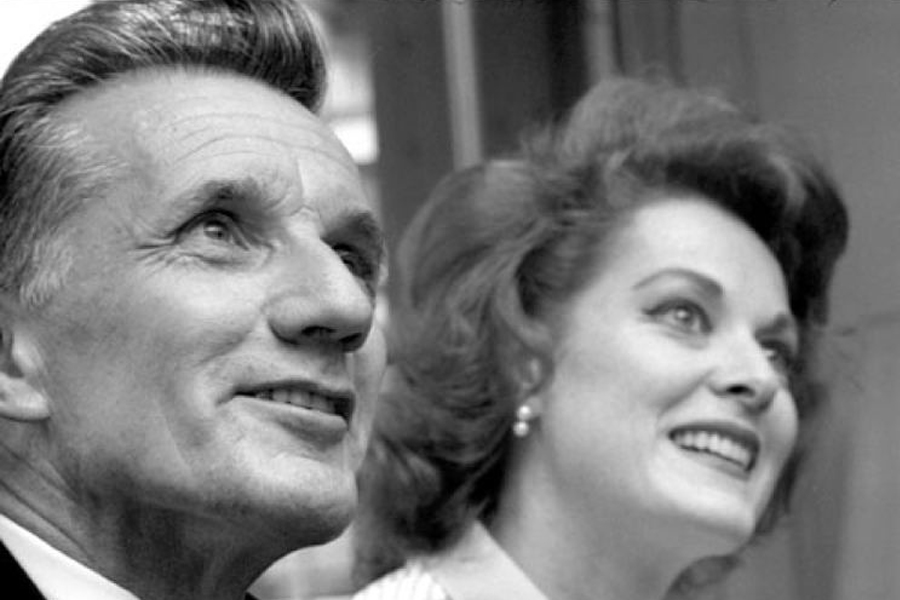
Basic Information
| Field | Details |
|---|---|
| Full name | Charles Francis Blair Jr. |
| Born | July 19, 1909; Buffalo, New York |
| Died | September 2, 1978; age 69, seaplane crash off St. Croix |
| Education | B.S. in Mechanical Engineering, University of Vermont, 1931 |
| Occupation | Airline captain, airline owner, military pilot, author |
| Military rank | Brigadier General, U.S. Air Force Reserve |
| Notable aircraft | P-51 Mustang “Excalibur III”; Grumman Goose |
| Airline founded | Antilles Air Boats |
| Marriages | Four marriages recorded; most publicly known spouse Maureen O’Hara (married 1968) |
| Children | Four: Suzanne, Christopher, Charles Lee, Stephen |
| Major awards | Harmon International Trophy for polar flight |
Early life and mechanical curiosity
Born July 19, 1909, in Buffalo, New York, Blair carried the smell of oil and the geometry of engines in his bones from an early age. He soloed at 19 after training at the Ryan Flying School in San Diego, a brief, decisive act that set the course of a life spent at altitude. He completed a B.S. in mechanical engineering in 1931, giving him formal tools to pair with a pilot’s instinct. The sequence is crisp: born 1909, solo 1928, degree 1931. Those early dates read like coordinates on a map pointing toward daring.
From line pilot to transatlantic captain
During the 1930s and 1940s Blair moved through the professional ranks with steady increments and dramatic leaps. He flew for United and for American Export Airlines, becoming chief pilot by 1940 and managing crews and routes that stitched continents together. In World War Two he served in the U.S. Navy Air Transport Service, flying large flying boats across the Atlantic on vital logistics missions to Foynes, Ireland. After the war he joined Pan American World Airways as a senior captain and logged more than 1,500 transatlantic crossings, a statistic that underlines discipline and relentless work.
Key career numbers
| Item | Value |
|---|---|
| Transatlantic crossings | Over 1,575 |
| North Pole solo flight distance | Approximately 3,260 miles |
| North Pole solo flight time | 10 hours 27 minutes |
| New York to London record | 7 hours 48 minutes |
Those figures are not trophies on a shelf. They are the pulse of an aviator who treated long-distance flight as a laboratory for technique and machinery. In 1956 he led three F-84F jets across the Atlantic using aerial refueling, a demonstration of logistical nerve and emerging Cold War capability. By 1959 he held the rank of Brigadier General in the Air Force Reserve, a title that added institutional weight to a career already full of personal records.
Excalibur III and the polar imagination
Blair’s P-51 Mustang, named Excalibur III, became a symbol as much as a vehicle. On May 29, 1951 he completed a solo crossing of the North Pole in a single-engine aircraft, flying from Bardufoss, Norway to Fairbanks, Alaska in 10 hours 27 minutes. The flight covered roughly 3,260 miles and earned him the Harmon International Trophy. Image that ride: a silver arrow cutting a continent-size ice bowl while instruments and nerves worked in tight harmony. He had also set a speed benchmark between New York and London earlier that year in the same airplane, flight time 7 hours 48 minutes, which read as a headline of its day.
Antilles Air Boats and island aviation
In the 1960s Blair founded Antilles Air Boats, a seaplane operation based in the U.S. Virgin Islands. The airline specialized in short hops between islands and in the artistry of operating boats that flew. Antilles Air Boats combined entrepreneurship with a regional service ethos, and for a time it anchored Blair in the business of running aircraft rather than only commanding them. After his death his wife Maureen O’Hara maintained involvement until the operation wound down in the early 1980s.
The fatal flight and final logbook entry
On September 2, 1978 Blair died when his Grumman Goose experienced engine failure and crashed near St. Croix. He was 69. The crash closed a logbook filled with daring entries and steady commitments; it also left a widow who had been both Hollywood partner and aviation steward. The manner of his death reads like a last stanza in a poem about a life lived where earth meets air.
Family and relationships
Blair’s personal life was complex and public in parts. He married four times; the most widely known marriage was to actress Maureen O’Hara on March 11, 1968. His family comprised four children from earlier unions: Suzanne, Christopher, Charles Lee, and Stephen. The children remained largely private personalities, referenced in obituaries and genealogies rather than in headlines. Maureen O’Hara brought her own family into the household, making a blended family that connected Hollywood and aviation.
Family at a glance
| Name | Relation | Notes |
|---|---|---|
| Suzanne Blair | Daughter | From first marriage; private life |
| Christopher Blair | Son | Limited public record |
| Charles Lee Blair | Son | Listed in family records |
| Stephen Blair | Son | Noted in memorial accounts |
| Maureen O’Hara | Wife | Married 1968; actress and later steward of airline affairs |
There is some ambiguity in historical accounts about the exact sequence and number of marriages reported in various records. That fuzziness is a human detail more than an error; lives are not always neat entries in a ledger.
Writings and public voice
Blair wrote about his flights. His book Red Ball in the Sky recounts episodes from the cockpit with mechanic precision mixed with the lyric of a man who loved altitude. The text reads like a pilot telling a long after-dinner story, with technical asides and a taste for the dramatic. His public voice was both directive and anecdotal, practical about machines and reflective about the sky.
Legacy, memory, and how he is remembered
Blair’s legacy lives in multiple registers. He is a figure in aviation museums, a name etched near seaplane docks, and a character in the memory of those who watch anniversary posts on social platforms. He is remembered as both a record setter and a builder of routes that connected islands to continents. His life is measurable in hours logged, in routes opened, and in a kind of stubborn optimism about what aircraft could do for connection.
Timeline
| Year | Event |
|---|---|
| 1909 | Born July 19 in Buffalo, New York |
| 1928 | Soloed at age 19 |
| 1931 | Graduated University of Vermont, B.S. mechanical engineering |
| 1932 | Married Janice Evelyn Davis |
| 1941 to 1945 | WWII service with U.S. Navy Air Transport Service |
| 1951 | Set NY-London speed record and completed solo North Pole flight |
| 1953 | Married Mae E. Gallmoyer |
| 1956 | Led three F-84F jets across Atlantic with aerial refueling |
| 1959 | Promoted to Brigadier General, USAF Reserve |
| 1968 | Married Maureen O’Hara, March 11 |
| 1960s | Founded Antilles Air Boats |
| 1969 | Published Red Ball in the Sky |
| 1978 | Died September 2 in Grumman Goose crash off St. Croix |
FAQ
Who was Charles F. Blair Jr?
Charles F. Blair Jr was an American aviator who combined military service, record setting flights, airline leadership, and authorship into a career that spanned from the 1930s to the 1970s.
What was his most famous flight?
His most famous flight was a solo crossing of the North Pole in a P-51 Mustang called Excalibur III on May 29, 1951, covering about 3,260 miles in 10 hours 27 minutes.
How many children did he have?
He had four children named Suzanne, Christopher, Charles Lee, and Stephen, all from earlier marriages.
Who was Maureen O’Hara in relation to him?
Maureen O’Hara was his wife, married March 11, 1968, and she later took a leading role in preserving aspects of his aviation legacy.
What happened to Antilles Air Boats?
Antilles Air Boats was the seaplane company he founded in the U.S. Virgin Islands; it operated for years after his death before ceasing operations in the early 1980s.
When and how did he die?
He died on September 2, 1978, at age 69 when his Grumman Goose experienced engine failure and crashed near St. Croix.